ServicesPrototyping & Fabrication

02 / PROTOTYPING & FABRICATION

Make a first version you can test.

Create physical parts or assemblies to check fit, explore a mechanism, or learn how a concept behaves outside the CAD screen.

Based in Windsor, Ontario. Working with project teams locally and worldwide.

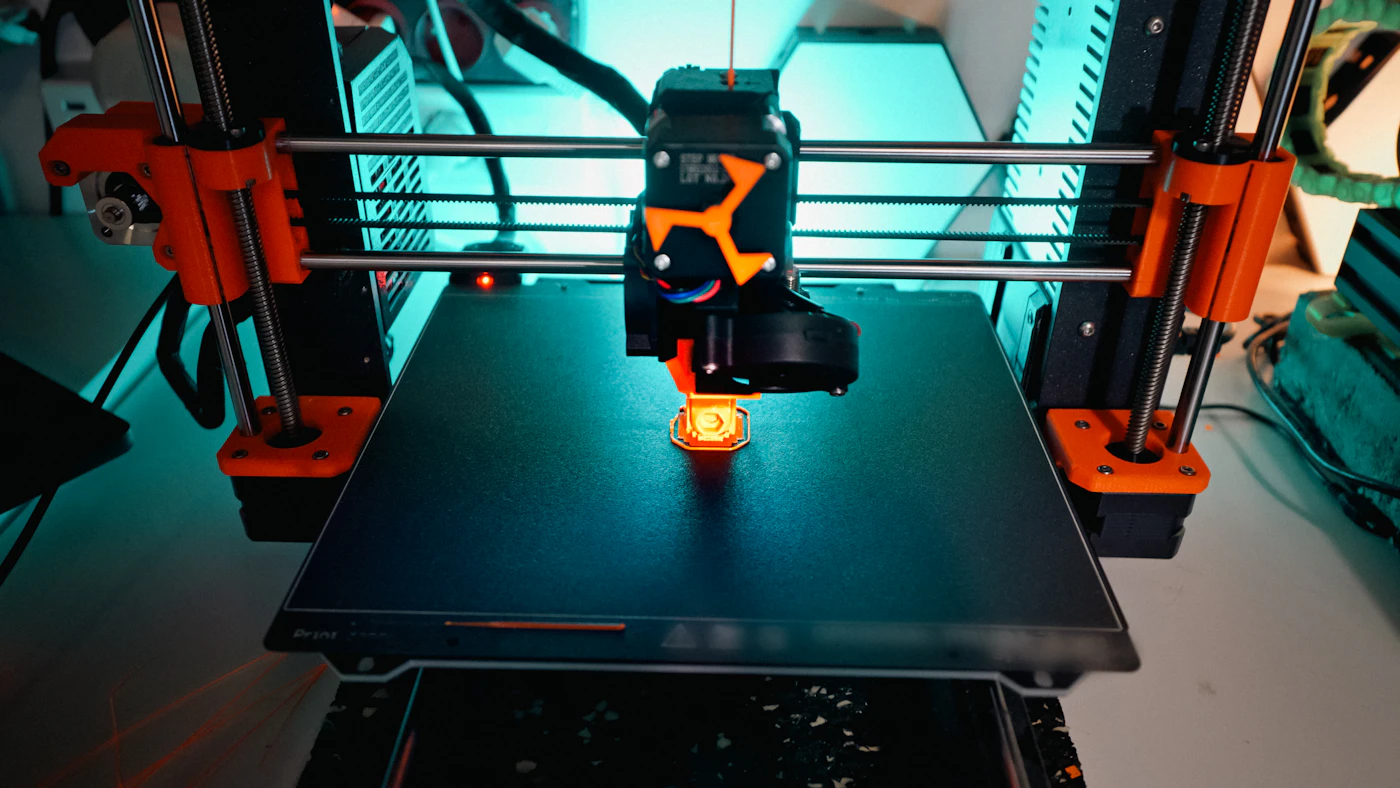
A 3D printer forming a small prototype part
Representative imagery · not a VS project photo

CAPABILITIES

Focused support for the details that matter.

Prototype work is organized around what you need to learn from the physical build. Part geometry, size, material, quantity, and intended use help determine whether in-house printing, assembly, or an external fabrication route is appropriate.

01

3D printing & CNC machining

Assess the shape, tolerance needs, material, quantity, and intended use to choose a suitable prototype route. Current in-house 3D printing is limited to a 180 × 180 mm footprint; CNC machining or larger parts may require a suitable external supplier.

02

Custom parts, fixtures & jigs

Design or build one-off components and workshop aids that hold, position, protect, or connect parts for a defined task. The fixture is scoped around the object, operator, and repeatability the task requires.

03

Prototype assembly

Bring agreed fabricated parts, fasteners, electronics, and off-the-shelf components into a testable physical build. Assembly needs, access, and any known fit issues are reviewed as part of the work.

04

Small-batch fabrication

Scope a limited quantity of prototype parts or assemblies when one build is not enough for evaluation. Process, consistency, lead time, and supplier availability are checked before a quantity is committed.

A GOOD FIT WHEN

  • You need a first physical version to check fit, access, motion, or assembly.
  • A custom fixture or jig could make a specific workshop task easier to repeat.
  • You want a small number of parts or an assembled proof of concept before deciding on a larger build.

HELPFUL TO SHARE

  • CAD, drawings, sketches, or a physical reference part.
  • Required dimensions, material preferences, quantity, and use conditions.
  • What needs to be tested and what a useful result would look like.

A PRACTICAL APPROACH

Make progress one clear step at a time.

Start with the goal and the information you have. We’ll agree on the right scope before work begins.

01

Choose what to learn

Identify the key uncertainty: fit, access, movement, assembly, or another practical question.

02

Select an appropriate route

Assess dimensions, materials, quantity, and intended use to determine a suitable prototyping approach.

03

Build and evaluate

Make or coordinate the agreed prototype, then review what it shows and what should change next.

POSSIBLE PROJECT OUTPUTS

Useful handoffs for the next stage.

Deliverables are selected and defined for each project. Depending on the agreed scope, they may include:

The current 3D printer has a 180 × 180 mm build footprint. Larger parts or other processes may need to be split into sections or scoped with an external supplier; feasibility is confirmed before work begins.

← Browse all service areasView selected project work ↗

YOUR NEXT STEP

Tell us what
you’re working on.

A rough idea, an existing design, or one specific technical problem is enough to start.

Start a project